Showing posts with label heron. Show all posts

Sunday, January 27, 2013

AUSTRALIA 2012/2013 

The diversity and colours of Australia's wildlife makes Australia an exciting place to photograph. I had the opportunity to spend some time over Christmas in Australia visiting family and enjoying some rest and relaxation - which involved some photography of course!!!

My grandparents live approximately 1 hr south of Sydney, close to some wonderful birding opportunities! One great birding spot is Lake Illawarra, I was amazed at the amount of bird-life on the lake and enjoyed photographing many species for the first time. I always enjoy flicking through the Australian bird book and identifying birds for the first time...

The first species I photographed were great egrets or white herons as they are known in NZ. I love photographing these elegant birds, as they stalk their prey with grace and finesse and strike with pin point accuracy.

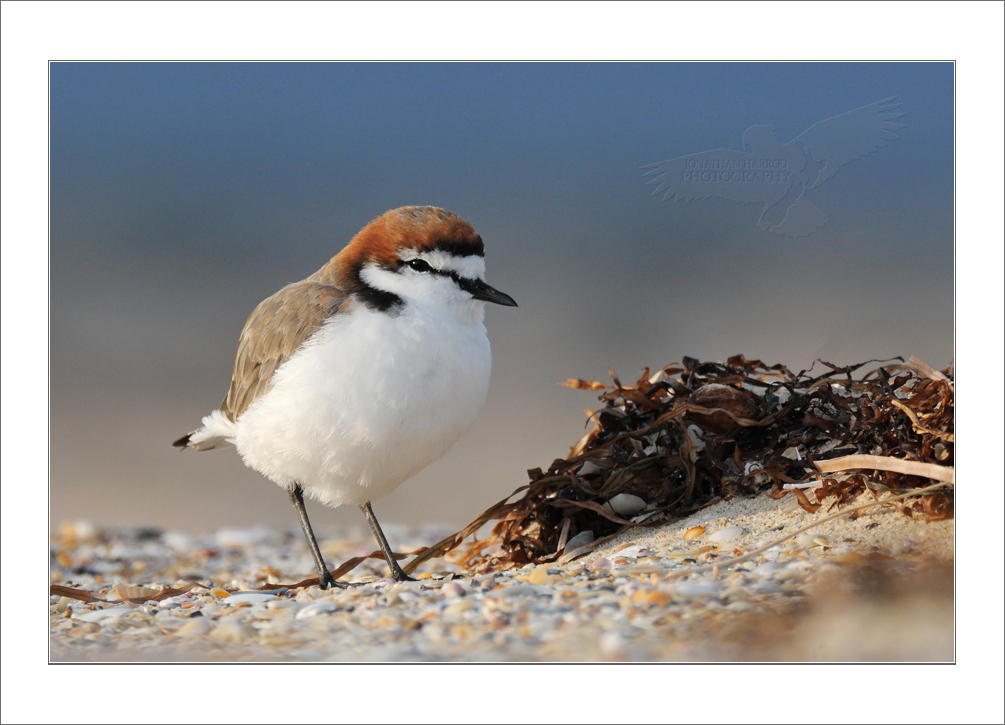
One particular species I wanted to photograph was the red-capped plover/dotterel, a beautiful little shorebird endemic to Australia. I found a small number roosting at the entrance to the lake thanks to some information from Charles Dove a local birder/bird photographer and member of the Illawarra bird observers club. I loved how the dried kelp mirrored the lovely auburn colours on the bird's cap so I tried to incorporate this in the photograph below.


I made a point to carry my camera wherever I went in case a photographic opportunity showed itself. I was pleasantly surprised when I found an eastern yellow breasted robin's nest on a family trip to the beautiful Hyams Beach, an area which seemed to have a huge abundance of wildlife. I had a great time watching and photographing the robin family for the afternoon as the adults fed their three hungry chicks. Carrying the camera really paid off!!


This beautiful little nest is made from bark shreds and spiders web, lined with grass and leaves, adorned with bark, lichen and moss. The eastern yellow robin is such a stunning little bird with a wonderful bright yellow breast, and it's soft squealing whistles are a welcome sound in the bush.


WOW, a new year! I'm still left wondering where 2012 got to, it seems like the year has flown by so fast. I don't know about you, but I find this time of year a good time to reflect on a year past and plan for the year ahead. What are my goals and aspirations for 2013? There may be many goals involving your employment, fitness, family, house, holidays... but have you set yourselves any plans for your photography? Have you set any photography goals or aspirations?

"Think first about the photo you want to capture, if you shoot first and think later that's a snapshot not a photo" (Frans Lanting). I really like this quote and think it rings  particularly true for wildlife photography! I'm sure that many, if not all of you have envisaged elaborate photographs in your head that you would love to capture... I have one had one in my head of a New Zealand kingfisher diving into the water after it's prey for some time now.

I think it is extremely beneficial for us as photographers to set ourselves achievable goals or projects... perhaps capturing a particular species, behaviour or location. I think it helps to be pro-active photographers, creating that special moment, not just hoping that it will come along! I know that wildlife in particular can be often unpredictable, and sometimes its very much about being in the right place at the right time, although there are steps that can greatly increase your chances of being there to capture that special moment when it happens. Things like researching your subject, asking yourself questions like, when is my subject most active?, how do the tides affect my subject or it's location?, what does my subject feed on?, what are my subjects favorite feeding, roosting or bathing spots?...etc

How do you tackle your photography? Do you have a shot in mind before you get behind your camera? Whether you are a professional photographer or a weekend snapper a little pre-thought can dramatically improve your photography! Whether or not you capture that elaborate envisaged photograph or not, you'll learn a lot and have a heap of fun!!!


Wednesday, February 29, 2012

Suspected avian botulism outbreak in Christchurch
Toll reaches over 4300

Over the past month there has been a dramatic decrease in Christchurch’s birdlife. The Avon/Heathcote Estuary and Bromley area has suffered a real loss of more than 10 per cent of the area’s bird population; a devastating blow to one of the country’s top ten sites for wetland birds. Over 4300 dead birds have been collected in the area; this number surpasses the death toll of the Rena oil spill last year. 

  White-faced heron (9.61% of population killed)

Immediately following February’s earthquake large volumes of untreated wastewater were discharged into the lower Avon and Heathcote Rivers as well as the Avon-Heathcote Estuary. 

A bird survey taken last year, a week after the February quake showed surprisingly that there were approximately 5000 more birds on the Estuary than the previous year (before the quakes), and initial fears that there would be nothing left on the Estuary due to liquefaction were quelled. The initial influx in bird numbers directly after the quake could have been due to birds flocking to the area as ‘quake refugees’.

You only have to look at the estuary and the effects of the quakes are immediately evident - the estuary is now a physically different place. The northern part of the estuary (Avon River mouth) has subsided by 0.2 - 0.5 metres from its previous level and the Southern part (Heathcote River mouth) has risen by 0.3 – 0.5 metres. According to a NIWA report there is an average elevation rise of 0.14 metres which is enough elevation to keep a million cubic metres (400 Olympic-sized swimming pools) of water from flowing in and out of the estuary, that’s one-sixth of its original flow. 

I remember being struck by the amount of liquefaction on the estuary after the February earthquake. Some parts of the estuary resembled the surface of the moon, with large crater like liquefaction mounds covering the mudflats for kilometres! NIWA estimate that up to 40 per cent of the estuary was covered by liquefaction mounds after February! Liquefaction has the potential to smother estuarine biota and I’ve noticed a dramatic reduction in epifauna especially mudsnails and mudcrabs. Crab burrows once covered much of the Avon/Heathcote estuary and there has been a visible reduction of these burrows due to liquefaction cover at my bird photography sites. Mud crabs are an important food source for birds like the kingfishers and herons and there has been a noticeable reduction in kingfishers and herons at these once popular feeding spots.   
    
A NZ Kingfisher with a mudcrab, epifauna such as mudcrabs have lost habitat due to liquefaction

On the 9th of February an article in The Press expressed its concern with the finding of 600-800 dead birds around the Christchurch estuary, in particular Bromley oxidation ponds and the eastern wetlands area. According to council ornithologist Andrew Crossland the deaths are more to do with the fluctuating water levels and the changes in water quality due to the earthquakes. Over the weekend another article reported that the death toll now is above 4300 birds! The fatalities are thought to be a result of a suspected avian botulism outbreak due to an increase in sewage levels. The Council is working with the Department of Conservation, vets at Massey University, Ministry of Agriculture and Fish & Game to determine the cause of deaths.

The worst affected species are the paradise shelducks, which lost more than 85 per cent of their population (1415 birds), the mallard/grey ducks (49 per cent or 385 birds), and the grey teal (13 per cent or 495 birds), NZ scaup (8.54 per cent), NZ shoveler (3.5 per cent). These staggering numbers mean that there will be a substantial decrease in numbers around the estuary and Bromley, as well as at source areas and migration/dispersal destinations. Duck species are not the only ones that have suffered losses - white-faced herons, royal spoonbills, black-backed gulls and the endangered black-billed gulls, just to name a few, although these species' populations should recover in one to three years. In yesterday’s Press there was a photo of a royal spoonbill being rescued by a DOC officer, suspected of having avian botulism. Providing mildly affected birds with fresh water, shade and protection from predators may help them recover from the intoxication. 

  Male paradise shelduck (85.34% of population killed)
 
 Mallard (49.18% of population killed)

 Grey teal (13.33% of population killed)

 NZ Scaup (8.54% of population killed)

Avian botulism is a paralytic disease caused by the ingestion of a toxin produced by the bacteria, Clostridium botulinum. The bacteria require warm temperatures, a protein source and an anaerobic environment to produce the toxin, and the increased sewage levels due to the earthquakes may have been responsible for aiding in this intoxication. Birds can either ingest the toxin directly or feed on invertebrates such as maggots containing the toxin. Invertebrates are not affected by the toxin but store it up in their bodies. The spread of avian botulism happens when maggots feed on animal carcasses and ingest the toxin, birds that consume toxin-laden maggots can develop botulism after eating as few as 3 or 4 maggots, therefore the swift removal of dead birds will help minimise the spread of the disease. 

 NZ shoveler (3.50% of population killed)

Further facts about avian botulism :-
  •          A paralysing, often fatal disease that is caused by a botulism bacterium.
  •         Birds suffering from the toxin will have sluggish movements, and will struggle to use their wings, raise their heads or feed as it affects the nervous system.
  •      Avian botulism cannot be transferred to humans.

The good news is that the numbers of dead birds being found is slowly decreasing. Regardless of the cause of mass deaths let’s hope that this decline in deaths will continue and that Christchurch will still remain one of the top ten national sites for wetland birds!

 South island pied oystercatcher (0.09% of population killed)

Wednesday, September 21, 2011

SPRING IS HERE

SPRING IS HERE
 
I can always tell when Spring is here because a pair of mallard ducks start knocking at my door... every Spring without fail the pair arrive on our front deck and tap on our glass sliding door wanting a feed. Spring is finally here!!! and the breeding, nesting and hatching has begun! What a wonderful time of year for a wildlife photographer. Amongst the earthquake rubble the daffodils are in full flower and our city is being transformed by Spring's vivid colours!


| Above: A pied shag with stunning breeding colours |

Lately I've been busily trying to get my images organised and I've spent the last few weeks editing and sorting through a huge number of photos... and I can happily say that I'm almost done (phew!). I always prefer to be out with the camera rather than behind a computer, although I find it interesting going through old pictures and re-discovering photos and trips again.

It's been great doing talks for photography clubs and societies... and I had a wonderful time talking to the New Brighton Photography Club on Tuesday night - what a good bunch of people! I'm looking forward to meeting and talking to the members of the Greymouth Photography Club next month and spending some time photographing some of the birds on the west coast!


 | Above & Below: The endemic Black-fronted tern |


Last Friday night a friend and I threw our kayaks on the car and headed up the coast to a place called Kaikoura to spend the weekend kayaking around the peninsula. There is always something special about kayaking around the peninsula and we were treated by some great weather, some fantastic views and great wildlife like the New Zealand fur seals. 

A special moment for me was when a reef heron flew directly over our kayaks and landed on the rock platform a few metres away. The photos below are  some of the photos of the reef heron (Egretta sacra) feeding... what a buzz considering that these secretive herons are not a common sighting in New Zealand, especially in the south island.


| Above: A banded dotterel strolls amongst the weed on the Kaikoura Peninsula |


| Above: A New Zealand dotterel preening | Below: Shag Pile, Christchurch |


It's been fantastic to have the very talented Karen Neal use some of my photos as references for her wonderful wildlife paintings. I received a print of the wonderful kingfisher painting 'Gone Fishing' recently... go check out her work!

Saturday, September 11, 2010

SPOTLIGHT: White-faced heron (Ardea novaehollandiae)


White-faced herons would have to be one of my favourite birds to photograph! (I tend to say that about a lot of birds). Although there aren’t too many birds that can rival the beauty, grace and finesse of the heron, or match the heron’s speed, precision and deadly accuracy. I never seem to tire of watching the herons feed at my local estuary, herons are masterful hunters, and I've seldom seen a heron miss its target. In the above photo a small mud crab hangs onto the heron's beak for dear life!


DISTRIBUTION: The white-faced heron is common throughout most of Australasia, and was self-introduced to New Zealand in the early 20th century. It was first observed breeding here in the 1940s and now breeds in abundance throughout New Zealand.

White-faced herons are very adaptable birds and are particularly successful in New Zealand due to their ability to inhabit almost any wetland environment, from sandy/rocky shores, estuaries, mudflats, lakes, rivers, pastures … in fact white-faced herons are just at home inland as they are on the coast. 
  

DIET & FEEDING: White-faced herons are now the most common heron species in New Zealand; part of the reason for this success is their varied diet which consists of molluscs, insects and their larvae, spiders, plant matter, small fish and reptiles, frogs, marine worms and even mice. 

White-faced herons stalk their prey by either actively wading in shallow water or standing still and waiting for prey movement. White-faced herons use an assortment of techniques in their feeding repertoire from wing flicking and foot stirring (both used to disturb and subsequently locate small fish and invertebrates) to chasing prey with open wings.

For such an elegant bird the white-faced heron's call has been described as a 'croak', 'gobble' or gutteral "grraaw", which is typically given in flight or during aggressive encounters.

Prior to the breeding season the herons undergo a moult and as a result develop reddish-brown nuptial plumes (breeding plumes) which appear on the foreneck & breast and long blueish-grey plumes on their back. The nuptial plumage is brighter than their basic plumage, for the purposes of sexual display.

BREEDING: The breeding season peaks between October and December where usually 3-5 eggs are laid in a messy nest of sticks high up in a tree. For around 25 days both the male and the female will share incubation duties. Chicks hatch with a white down and will fledge after approximately 6 weeks. The young stay with their parents until the next breeding season. 

So next time you're out and about, keep an ear out for that unmistakable "graaww" and spare a thought for these wonderful birds... chances are there's one near you!


A reef heron (Egretta sacra) stalks its prey in a typical hunched pose in the photo below. Reef herons are a much less common sight here in New Zealand.